Maktoum, Crown Prince of Dubai, Deputy Prime Minister and Minister of Defence of the UAE, is expected to significantly enhance the city’s urban mobility network by linking key commercial, residential and tourist hubs through underground tunnels.
Speaking during a session at the World Governments Summit in Dubai on Tuesday, Mattar Al Tayer, Director General and Chairman of the Board of Executive Directors of Dubai’s Roads and Transport Authority (RTA), said the agreement with the Boring Company was signed around 10 months ago, with execution expected within one to two years.
“Dubai Loop is an iconic project that embodies Dubai’s vision of smart transportation. It is an innovative and sustainable solution,” Al Tayer said.
Dubai will become the second city in the world after California to implement the tunnel-based transport system pioneered by the Boring Company.
The project will eventually span 24 kilometres, with the first phase covering around 6 kilometres. The initial stage is expected to cost about Dh600 million, while the full project is estimated at Dh2.5 billion.
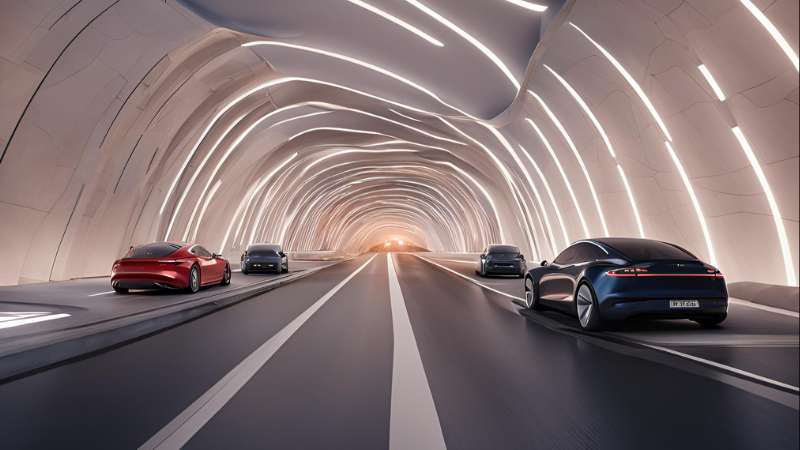
According to Al Tayer, the Dubai Loop relies on a network of underground tunnels with both surface and tunnel stations, designed to support end-to-end journeys in a seamless manner.
“With Dubai Loop, the journey begins in a holistic way and in an unprecedented manner,” he said. “The project connects the most important commercial, residential and touristic areas with the most active zones in the city.”
Areas expected to benefit in the initial phase include DIFC and the Dubai Mall, Burj Khalifa, among the city’s busiest destinations.
Al Tayer highlighted the cost advantage and construction method of the Boring Company’s technology compared to traditional metro tunnels.
“The cost difference is significant,” he said, noting a big cost difference per kilometre, with Loop being much cheaper than metro tunnels.
He added that the tunnelling method itself is also different, allowing for a gradual descent before moving into a straight-line excavation, which improves efficiency and speed of construction.
The system is expected to transport around 13,000 passengers per day in its initial configuration, while also addressing first- and last-mile connectivity challenges.
Al Tayer said the project reinforces Dubai’s credibility in delivering ambitious initiatives announced at global platforms such as the World Government Summit.
“The majority of projects announced at the summit have either been implemented or are under execution,” he said.
Construction of the first phase is expected to be completed within two years, with plans to accelerate subsequent stages once the initial segment is operational.