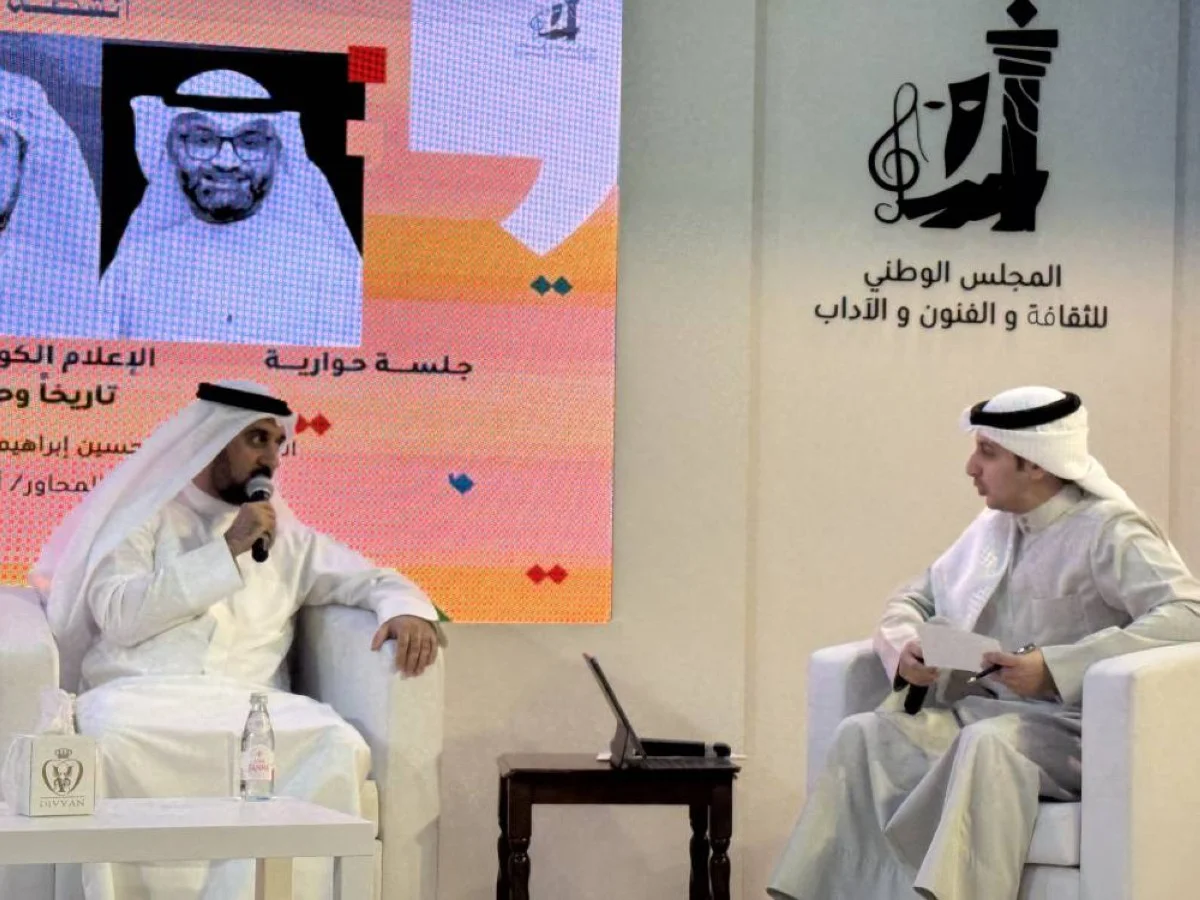
The 48th Kuwait International Book Fair, held under the patronage of His Highness the Prime Minister Sheikh Ahmad Abdullah Al-Ahmad Al-Sabah concluded on Saturday, highlighting the evolution of Kuwaiti media and its cultural role across past, present and future. The fair featured a special dialogue session in the “Culture Pavilion,” bringing together a panel of distinguished Kuwaiti media professionals.
Moderated by Fahad Al-Husseini, the session included Dr Ahmed Al-Haidar, Head of the Media Department at the International University of Science and Technology; Dr Fawaz Al-Ajmi, Professor of Media at Kuwait University; and Dr Hussein Ibrahim, Associate Professor in the Media Department at Kuwait University. Dr Al-Haidar traced the history of Kuwaiti media, noting that the first magazine, Kuwait Magazine, was published in 1928 abroad, followed by Kazma Magazine in 1948 within Kuwait. He highlighted the cultural impact of Al-Arabi Magazine, first issued in 1958, describing it as Kuwait’s gift to the Arab world due to its wide readership and cultural significance.
Discussing broadcast media, Dr Al-Haidar explained that radio in Kuwait began with a private station in 1951 before becoming a government service in 1961, alongside the launch of the official television network. He also noted the founding of the National Council for Culture, Arts and Letters and the inaugural Kuwait Book Fair in 1975, making it the third oldest in the Arab world after Cairo and Beirut. He outlined three key phases of media development: an experimental phase until 1961, a national and Arab-focused phase until 1990, and a post-1990 era with greater emphasis on local affairs. Dr. Al-Haidar emphasised that early awareness among Kuwaitis, supported by scholarships abroad, significantly influenced the quality and reach of the country’s media.
Dr Fawaz Al-Ajmi highlighted Kuwait’s soft power today, particularly its cultural influence, and stressed the nation’s commitment to excellence amid technological advancements, including the rise of social media. He praised the contributions of Kuwaiti youth and the private sector, noting that platforms such as Al-Arabi and social media initiatives have enhanced Kuwait’s presence in regional cultural and media events. Dr Hussein Ibrahim discussed the future of media in the era of artificial intelligence, highlighting the transition from traditional to smart media and the ethical challenges AI poses for content creation. He emphasized the need to harness AI positively to serve media professionals and maintain high standards of journalism and cultural communication.
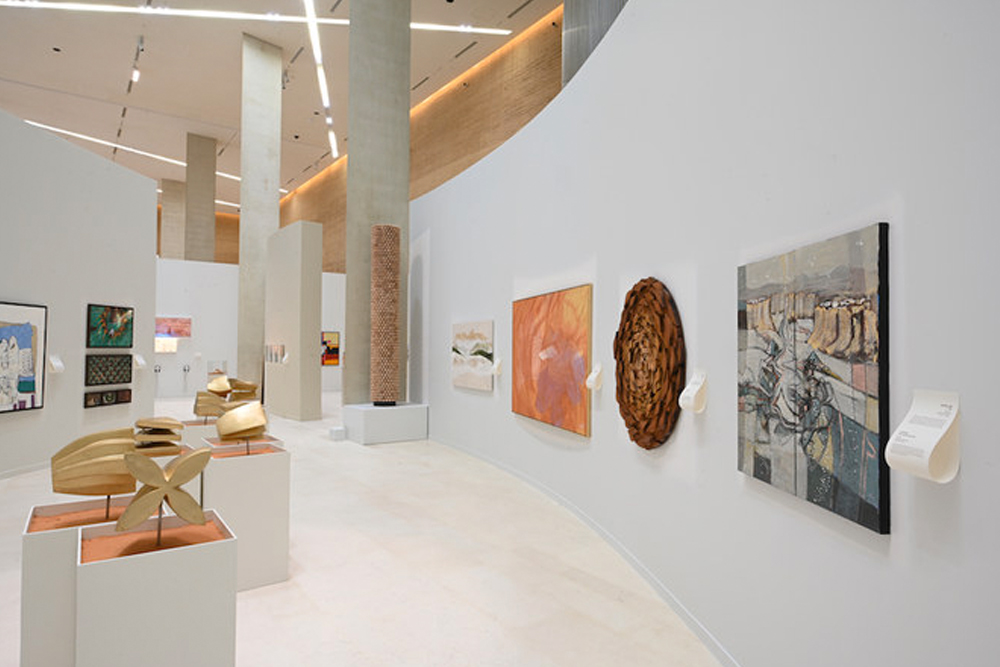
The 48th Kuwait International Book Fair, held from November 19 to 28, attracted approximately 477,560 visitors and featured over 287,000 titles from 611 publishing houses across 33 Arab and international countries. The event included 433 direct participants, 178 through agents, and 39 first-time participants. Around 35,000 of the titles were newly released. The fair offered a rich cultural program, including workshops, discussions, seminars, lectures, and panel sessions across the Cultural Pavilion, Cultural Café, and Children’s Pavilion. It coincided with Kuwait’s designation as the Arab Capital of Culture and Media for 2025, with the Sultanate of Oman as the guest of honour.
Mohammed bin Al Zubair, retired advisor to the Sultan of Oman for economic planning and founder of Bait Al-Ula, was recognised as the fair’s cultural figure for his distinguished contributions to Arab culture. This year’s exhibition, held under the slogan “Capital of Culture… Home of the Book,” also featured the “I Am the Author” initiative, producing 1,240 books by children, and hosted 84 publishing houses through the Arab Publishers Professional Program, aimed at fostering growth and development in the regional publishing industry.