

The UK’s most senior doctors say there is an “overwhelming consensus” that time spent on screens and social media harms children.
Responding to a government consultation about social media use for under-16s, the Academy of Medical Royal Colleges said doctors should routinely ask younger patients about their screen time and social media use.
There is no consensus among the wider scientific community that screen time overall is harmful to children, but Academy Chair Jeanette Dickson said that like smoking or seatbelts before, the issue had become a “unifying force” for the profession.
Technology Secretary Liz Kendall has said new measures for under-16s will be brought in by the end of 2026.
It comes as the government’s consultation on the matter closes on Tuesday night.
Banning social media for children, as has happened in Australia, is one of the options being considered.
Kendall said a response to the consultation would be published in the summer, with action taken by the end of the year.
Campaigners are split on whether an outright ban on social apps for children is the best approach.
Since March, the government has been asking parents and children if measures including app curfews and stronger age checks would improve online safety, and trialled these in some UK homes.
“The question isn’t whether we’re going to act – we will,” Kendall told the BBC.
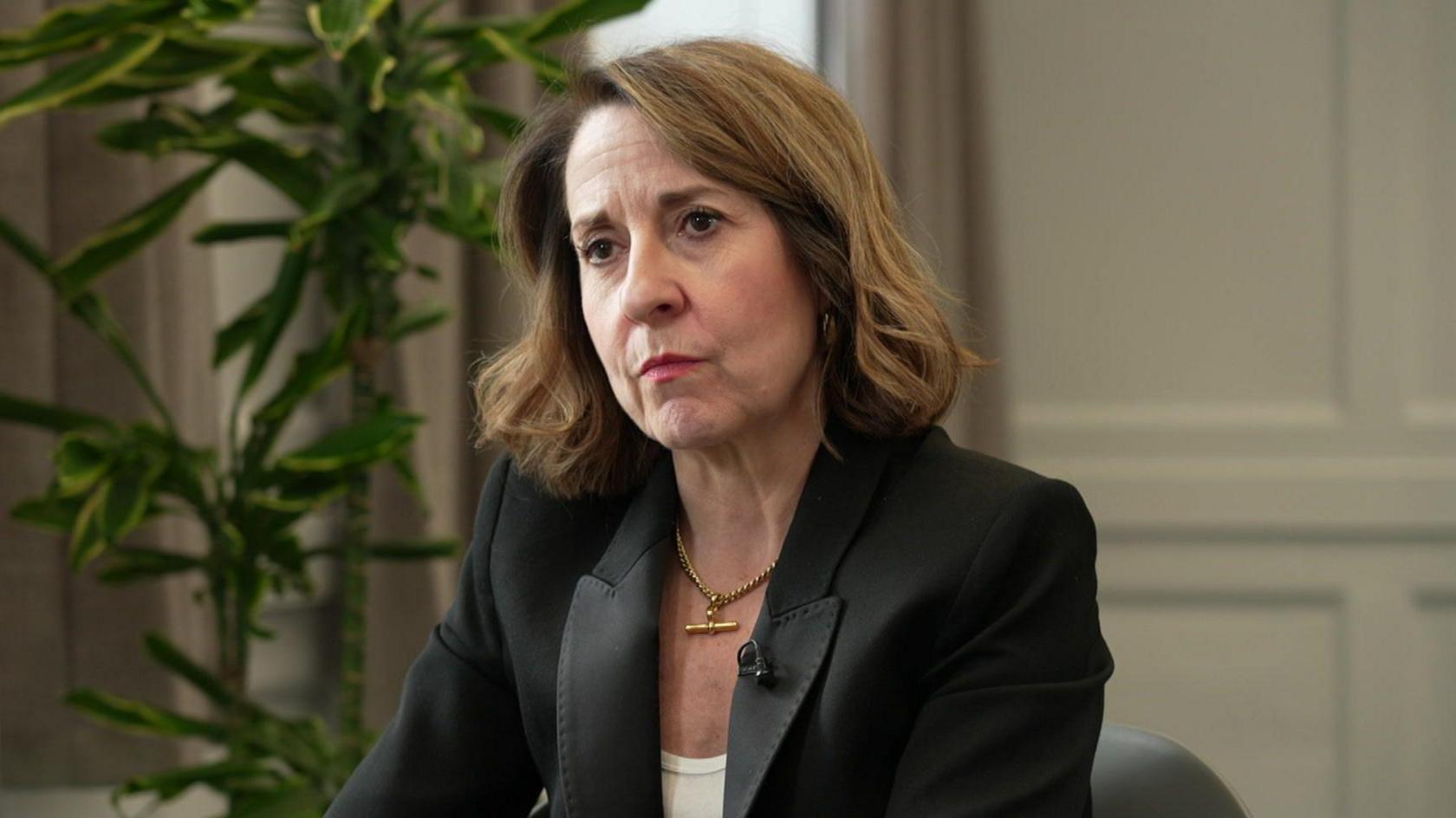
She said the government’s scope was looking at a broad range of issues and features and how these affected children.
This could see the UK look more closely at platforms not covered by Australia’s restrictions, such as Roblox and Discord.
But Kendall said the government wanted to hear “all views” from the consultation, which closes at the end of Tuesday.
“We’ve got to get this right, and we’ve got to make it last,” she added.
The consultation has seen 70,000 submissions from charities, campaign groups and members of the public who have given their views on a ban or other interventions.
People were also asked for opinions on possible restrictions, including night-time curfews or features such as auto-play and infinite scroll being disabled.
It also included questions about children’s access to AI chatbots, and if enforcement of age checks should be strengthened.
In its submission, external, the Academy of Medical Royal Colleges compared social media and screen time use to the issue of smoking or seatbelts in previous decades, calling it a “unifying force for the medical profession”.
While it acknowledged causal evidence between device usage and health harms was scant, it said there was “overwhelming consensus” among its members that there was a link.
“We need to call this out unflinchingly rather than passively wait for someone else to prove causation,” Dickson said.
It cited examples of physical and mental health problems caused by watching extreme violence online.
It said there should be guidance for doctors and other health staff on how to spot any inappropriate or unhealthy use of social media and online content.
The Academy also recommends recording potential harms to fill gaps in data on the scale of the problem.
Big tobacco comparisons
It is not the first time screen time and social media have been likened to smoking in posing risks to people’s health and wellbeing.
The Academy said in its submission that “successive governments have made an art form of inaction” on screen time risks.
“The difference now is that the harm being done to children online is not hypothetical… it is immediate, it is documented and it is happening at scale,” it added.
There have been frequent calls in recent years for warnings similar to those on cigarette and tobacco products to be used to highlight risks of using social apps for young people.
A recent California lawsuit which saw a young woman successfully sue Meta and YouTube over her childhood addiction to social media has been declared a “big tobacco” moment for big tech.
Former health secretary Wes Streeting likened the industry’s use of “addictive” design features such as endless scrolling to actions of tobacco giants.
He said that whistleblower testimonies over the years had highlighted similar industry practice and awareness of known harms.
“They know that the product they’re designing is addictive, they know that it is harmful, and the business model is orientated towards getting kids while they’re young,” he said.